The Rise of Low-Code/No-Code: Building Apps Without Writing Code
In today's fast-paced digital world, the demand for custom software solutions is skyrocketing. However, the traditional process of software development can be slow, expensive, and require specialized skills. This is where Low-Code/No-Code (LCNC) platforms step in, offering a revolutionary approach to application development.
LCNC platforms are rapidly transforming how businesses and individuals create software. They empower a new generation of “citizen developers”—people without formal programming training—to build functional applications, bridging the gap between business needs and technical capabilities. But what exactly are they, and how do they work?
What Are Low-Code/No-Code Platforms?
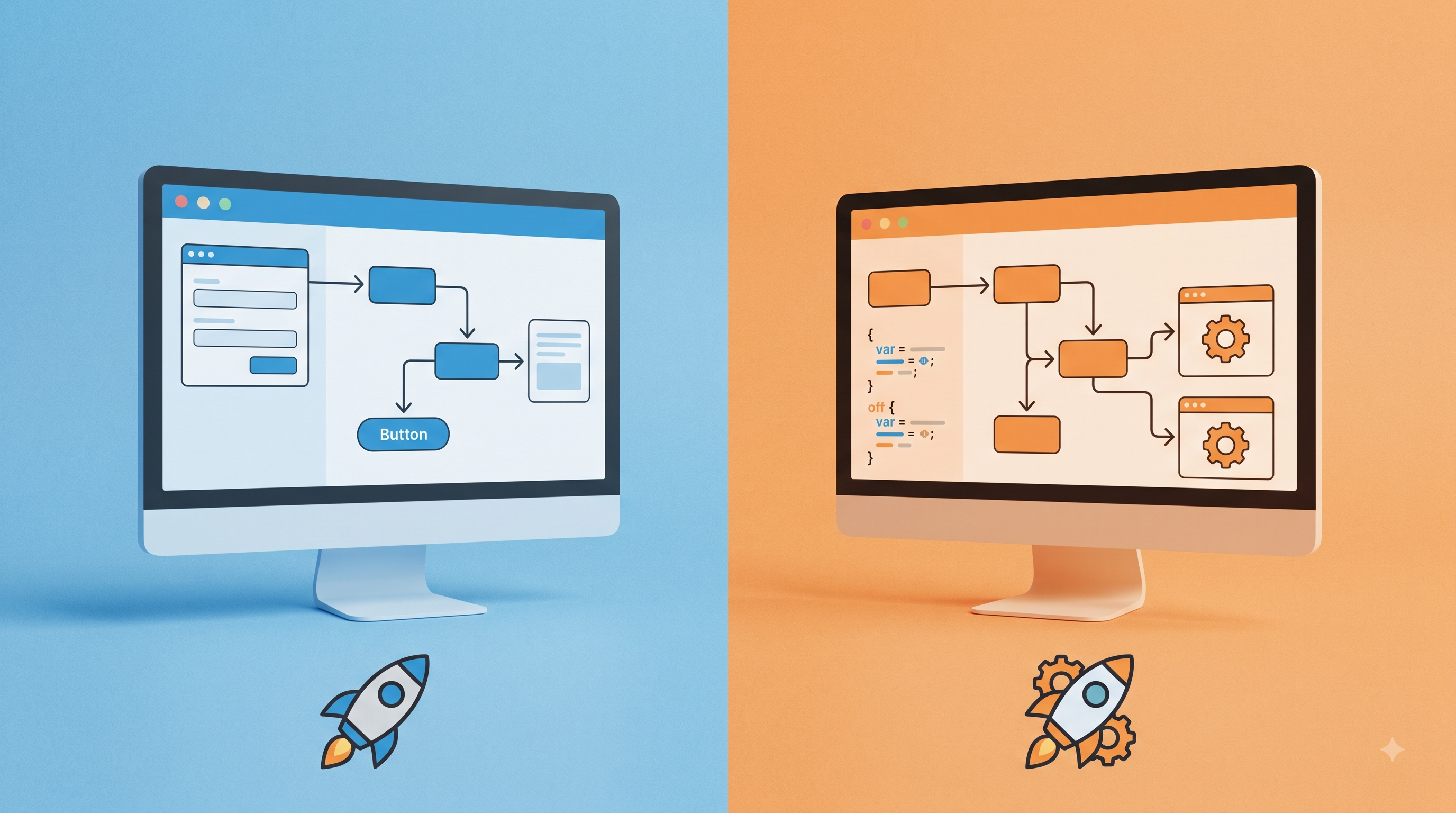
At their core, LCNC platforms are development environments that abstract away the complexities of traditional coding. Instead of writing lines of code, users build applications using visual interfaces with drag-and-drop components, pre-built templates, and intuitive workflows.
- No-Code Platforms: These are designed for users with little to no technical background. They offer a purely visual interface where applications are assembled entirely through configuration and drag-and-drop actions. Think of building a website with a visual editor like Wix or Squarespace, but for more complex business applications.
- Low-Code Platforms: These are aimed at a broader audience, including citizen developers and professional developers alike. While they offer robust visual tools and pre-built components to accelerate development, they also allow for custom code (hence “low-code”) to be injected for more complex functionalities, integrations, or specific customizations. This gives them more flexibility and power than pure no-code solutions.
How Do They Work?
The magic of LCNC lies in their abstraction layer. They provide:
- Visual Development Environment: A graphical user interface (GUI) where you can drag and drop UI elements, define data models, and set up business logic.
- Pre-built Components and Templates: Libraries of ready-to-use modules for common functionalities like forms, databases, user authentication, and reports.
- Declarative Logic: Instead of writing imperative code (how to do something), you declare what you want the application to do.
- Automatic Code Generation: The platform automatically generates the underlying code for the application based on your visual design and configurations.
- Deployment and Hosting: Many platforms also handle the deployment and hosting of your application, simplifying the entire lifecycle.
Key Benefits of LCNC Platforms
- Speed and Agility: Build and deploy applications significantly faster than with traditional coding, responding quickly to market changes and business needs.
- Reduced Costs: Lower development costs by requiring fewer skilled developers and reducing project timelines.
- Increased Accessibility: Democratize software creation, allowing business users to build tools tailored to their specific workflows without relying entirely on IT departments.
- Reduced IT Backlog: Frees up professional developers to focus on more complex, mission-critical projects.
- Consistency and Quality: Pre-built components and standardized processes often lead to more consistent and robust applications with fewer bugs.
Potential Limitations and Considerations
While LCNC platforms offer immense advantages, they are not a silver bullet for every development challenge. It's crucial to consider their limitations before adoption.
- Customization Limits: Pure no-code platforms can be restrictive for highly unique or complex business logic that falls outside their pre-defined capabilities. Low-code platforms offer more flexibility but still have boundaries.
- Vendor Lock-in: Applications built on a specific LCNC platform can be difficult to migrate to another platform or traditional code, potentially leading to vendor dependence.
- Scalability Concerns: While many platforms are designed to scale, very large-scale enterprise applications with extreme performance requirements might still be better suited for custom development.
- Security and Governance: While platforms often have built-in security features, managing access, compliance, and data governance for applications built by many citizen developers requires careful planning.
Who Uses LCNC Platforms?
The user base for LCNC platforms is diverse:
- Business Analysts and Operations Teams: To automate workflows, create internal tools, or build department-specific applications.
- Small and Medium-Sized Businesses (SMBs): To build customer portals, CRM systems, or e-commerce sites without a large IT budget.
- Professional Developers: To accelerate development of routine parts of applications, freeing them to focus on complex, bespoke features.
- Startups: To quickly prototype and launch Minimum Viable Products (MVPs).
Key Takeaways
Low-Code/No-Code platforms are fundamentally changing the landscape of software development by making it more accessible and efficient. They empower a wider range of individuals to create digital solutions, fostering innovation and productivity across organizations. While not without their limitations, their benefits in terms of speed, cost, and accessibility make them a powerful tool in the modern tech toolkit. As these platforms continue to evolve, they will undoubtedly play an even larger role in shaping how we build and interact with technology.
Be the first to leave a comment.
Leave a comment