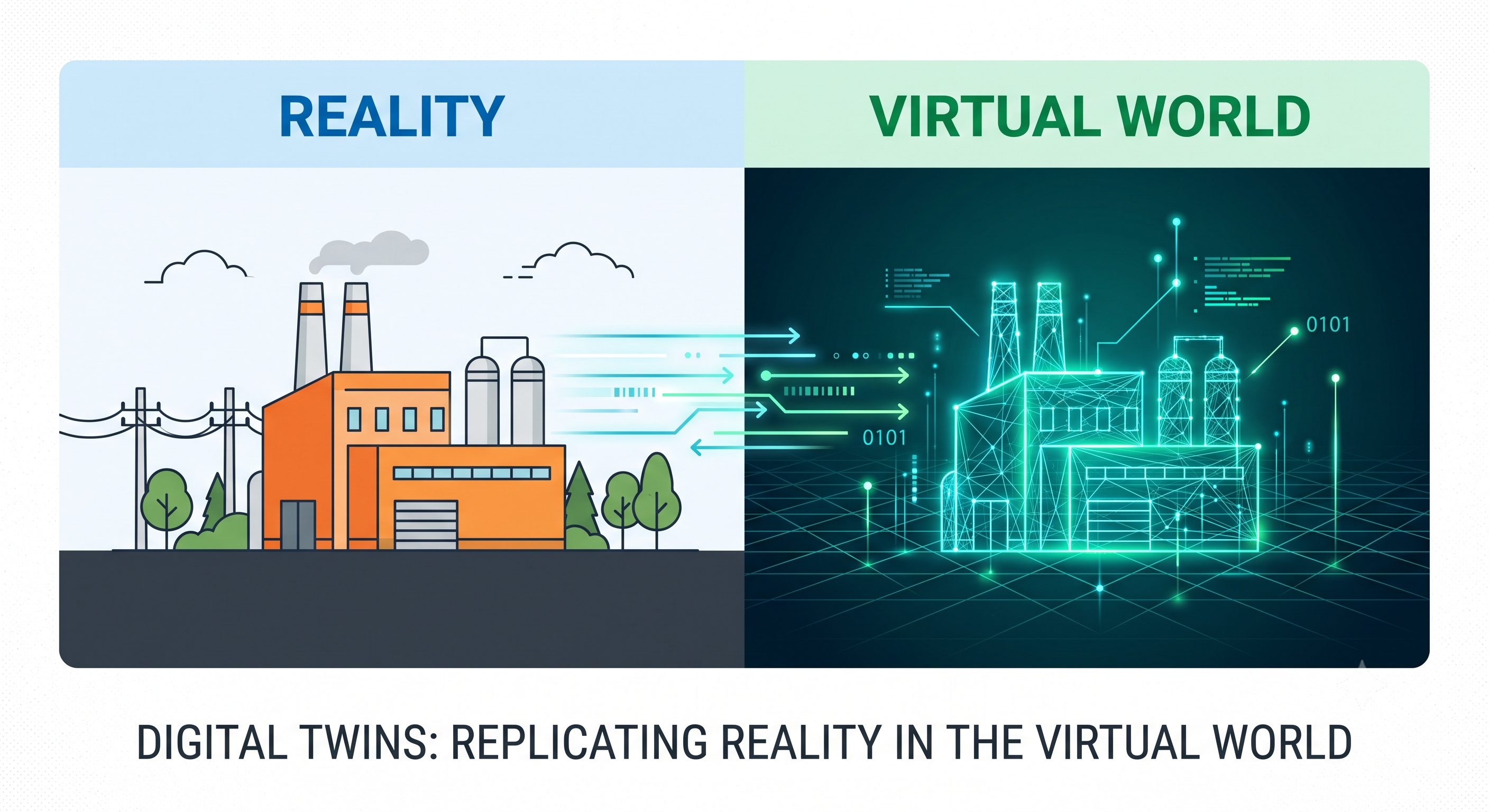
Digital Twins: Replicating Reality in the Virtual World
In a world increasingly driven by data and interconnected systems, the concept of a "digital twin" is transforming how industries design, operate, and maintain their assets. Far from being just a fancy simulation, digital twins are dynamic, living virtual replicas that offer unprecedented insights and control over their physical counterparts.
What Exactly Is a Digital Twin?
At its core, a digital twin is a virtual model designed to precisely reflect a physical object, process, or system. Think of it as a bridge between the physical and digital worlds. This virtual model isn't static; it's continuously updated with real-time data from sensors attached to its physical twin. This constant flow of information allows the digital twin to accurately represent the physical twin's status, performance, and behavior.
Key components of a digital twin include:
- The Physical Asset: The real-world object or system (e.g., a jet engine, a building, a human heart).
- The Virtual Model: A detailed digital representation of the physical asset.
- Connecting Data: Sensors collect real-time data from the physical asset and feed it to the virtual model.
- Analytics & Intelligence: Algorithms and AI analyze the data to provide insights, predict outcomes, and simulate scenarios.
- Feedback Loop: Insights from the digital twin can then inform decisions and actions taken in the physical world.
How Do Digital Twins Work?
The magic of digital twins lies in their ability to mirror reality in real-time. Here's a simplified breakdown:
- Data Collection: Sensors (IoT devices) embedded in the physical asset gather various data points – temperature, pressure, vibration, usage patterns, etc.
- Data Transmission: This data is securely transmitted to a cloud-based platform or local server.
- Model Creation & Update: Engineers create a sophisticated virtual model using CAD designs, physics-based simulations, and historical data. The incoming real-time sensor data continuously updates this model, ensuring its accuracy reflects the current state of the physical twin.
- Analysis & Simulation: AI and machine learning algorithms process the data to identify patterns, predict potential failures, optimize performance, and run "what-if" scenarios without impacting the actual physical asset.
- Actionable Insights: The insights generated can then be used to inform maintenance schedules, improve design, optimize operations, or even control the physical asset remotely.
Applications Across Industries
Digital twins are no longer a futuristic concept; they are actively deployed across diverse sectors:
- Manufacturing: Monitoring production lines, predicting equipment failures, optimizing product design.
- Smart Cities: Managing traffic flow, optimizing energy consumption in buildings, planning urban development.
- Healthcare: Creating virtual models of organs for surgical planning, monitoring patient health, designing personalized treatments.
- Automotive: Designing and testing new vehicle components, monitoring vehicle performance, predictive maintenance for fleets.
- Aerospace: Monitoring aircraft engines, predicting maintenance needs, optimizing flight performance.
Benefits of Digital Twins
The advantages of leveraging digital twin technology are significant:
- Predictive Maintenance: Anticipate equipment failures before they occur, reducing downtime and maintenance costs.
- Optimized Performance: Fine-tune operations and processes in real-time for maximum efficiency.
- Risk Reduction: Test changes and scenarios in a virtual environment without risking damage to expensive physical assets.
- Enhanced Design & Innovation: Rapidly prototype and iterate on designs, leading to faster innovation cycles.
- Remote Monitoring & Control: Gain visibility and control over assets from anywhere in the world.
Challenges and Considerations
While powerful, implementing digital twins comes with its own set of hurdles:
- Data Security & Privacy: Protecting vast amounts of real-time data from cyber threats.
- Cost & Complexity: Initial investment in sensors, software, and integration can be substantial.
- Data Accuracy & Integration: Ensuring the quality and seamless flow of data from various sources.
- Scalability: Managing and processing data from a growing number of digital twins.
The Future of Digital Twins
The evolution of digital twins is closely intertwined with advancements in AI, machine learning, IoT, and extended reality (XR). Expect to see increasingly sophisticated models, more intelligent predictive capabilities, and seamless integration with augmented reality (AR) and virtual reality (VR) for immersive interaction. They will play a crucial role in the development of truly autonomous systems and hyper-connected environments.
Key Takeaways
- Digital twins are real-time, dynamic virtual replicas of physical assets, processes, or systems.
- They bridge the physical and digital worlds through continuous data exchange via sensors.
- Benefits include predictive maintenance, optimized performance, and reduced risks across industries.
- Challenges involve data security, cost, and ensuring data accuracy.
- The technology is set to integrate further with AI, ML, and XR, driving future innovation.
Be the first to leave a comment.
Leave a comment