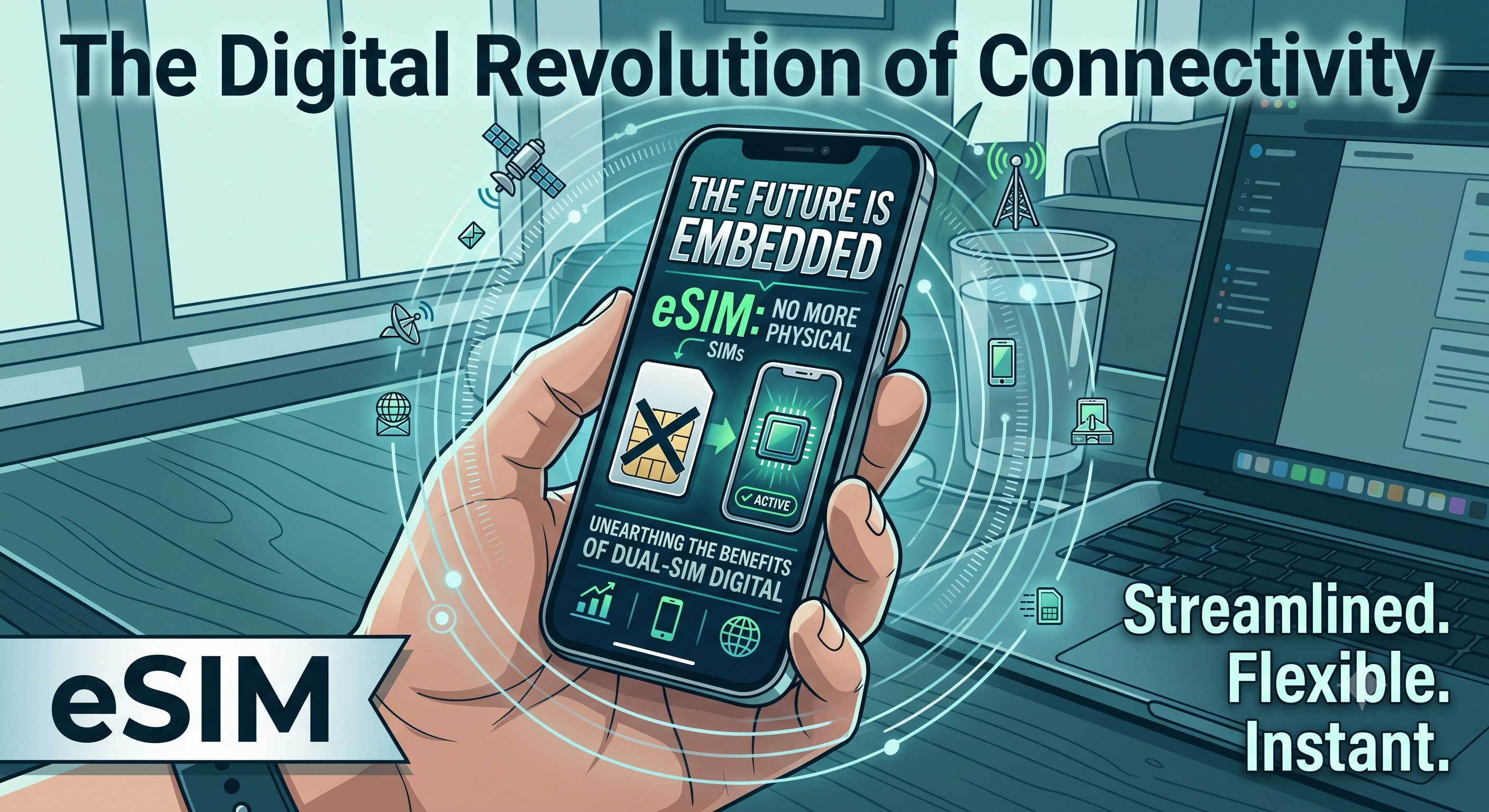
eSIM: The Embedded SIM Revolutionizing Connectivity
For decades, connecting to a mobile network meant fumbling with a tiny plastic card – the Subscriber Identity Module, or SIM. Whether you were swapping carriers, traveling internationally, or getting a new phone, the physical SIM card was a constant fixture. But a quiet revolution has been underway, spearheaded by a technology designed to make these physical exchanges a thing of the past: eSIM.
What Exactly is an eSIM?
Unlike traditional SIM cards that you insert into a tray, an eSIM (short for "embedded SIM") is a small chip built directly into your device. Think of it as a digital, programmable version of the physical SIM. Instead of swapping physical cards, you can download and activate mobile network profiles directly onto this embedded chip, often in minutes.
How Does eSIM Work?
The magic of eSIM lies in its ability to be reprogrammed. When you want to connect to a new carrier or change your plan, you don't need a new physical card. Instead, your carrier sends a digital "profile" to your device over the air. This profile contains all the necessary information to identify you on their network. Activation usually involves scanning a QR code provided by your carrier, or sometimes through a carrier's app or device settings. Your device then stores this profile on the eSIM chip, making the connection seamless.
The Advantages of eSIM Technology
The shift to eSIM brings a host of benefits for users, carriers, and device manufacturers alike:
- Unprecedented Flexibility: Switching mobile carriers or plans becomes incredibly easy. No more waiting for a new physical SIM to arrive in the mail or hunting for a local store. You can often activate a new plan within minutes.
- Ideal for Travelers: For globetrotters, eSIMs are a game-changer. You can quickly subscribe to a local data plan in a new country without needing to find a local SIM vendor or pay exorbitant roaming fees. Just download a profile from a regional carrier and you're good to go.
- Enhanced Dual SIM Experience: Many modern smartphones support both a physical SIM and an eSIM simultaneously. This allows you to effortlessly manage two different phone numbers or plans on a single device – perfect for separating work and personal calls, or having a local number while traveling.
- Space-Saving for Device Manufacturers: Removing the SIM tray and its accompanying mechanisms frees up valuable internal space in devices. This can lead to sleek designs, larger batteries, or room for other advanced components.
- Improved Security: An embedded SIM is harder to lose, damage, or have stolen compared to a physical card. It also reduces the risk of SIM-swapping fraud.
- Environmental Benefits: By eliminating the need for plastic SIM cards and their packaging, eSIM technology contributes to reducing electronic waste and the carbon footprint associated with their production and distribution.
Who is Using eSIMs Today?
eSIM technology is no longer a futuristic concept; it's already integrated into many popular devices:
- Smartphones: Most flagship phones from Apple (iPhone XS and later), Google (Pixel 3 and later), and Samsung now support eSIM.
- Smartwatches: Many cellular-enabled smartwatches, like the Apple Watch and Samsung Galaxy Watch, utilize eSIM for standalone connectivity.
- Tablets: Select models of iPads and other tablets offer eSIM capability for convenient mobile data access.
- Laptops & IoT Devices: We're also seeing eSIMs appear in some connected laptops and a growing number of Internet of Things (IoT) devices, enabling them to connect to networks without traditional SIMs.
Getting Started with eSIM
If your device supports eSIM and you're ready to make the switch, here’s a general guide:
- Check Device Compatibility: Ensure your smartphone, smartwatch, or tablet is eSIM compatible. Most newer devices are.
- Choose an eSIM-enabled Carrier/Plan: Contact your current carrier or explore new ones that offer eSIM services. Many provide online activation.
- Activate Your eSIM: Follow your carrier's instructions, which typically involve scanning a QR code through your device's settings or using their dedicated app.
Key Takeaways
- eSIMs are embedded, reprogrammable chips replacing physical SIM cards.
- They enable digital activation of mobile network profiles, offering unparalleled flexibility.
- Benefits include easier carrier switching, travel convenience, enhanced dual SIM, and environmental advantages.
- eSIMs are already common in smartphones, smartwatches, tablets, and IoT devices.
Be the first to leave a comment.
Leave a comment