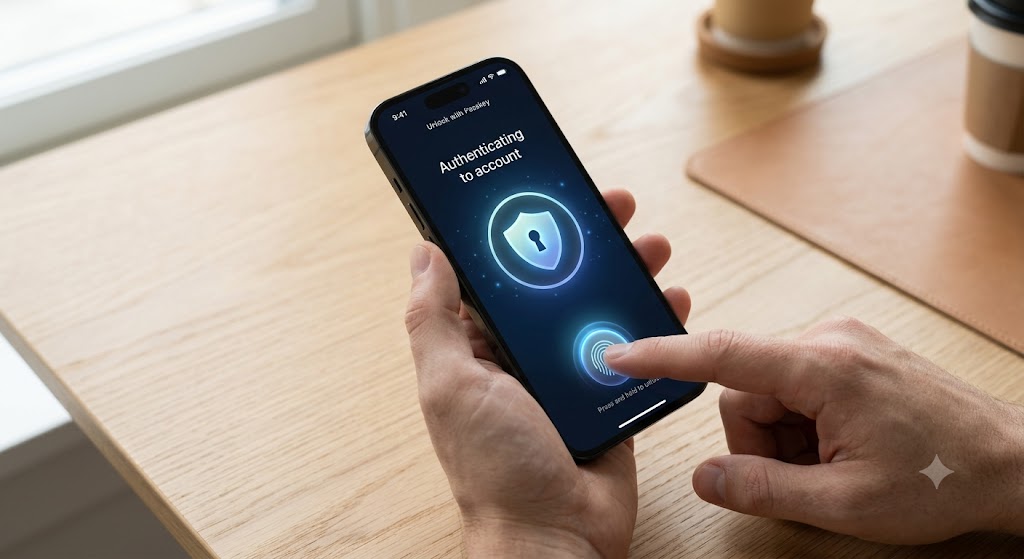
Passkeys: The Passwordless Future is Here
For years, we've heard the promise of a passwordless future. Now, that future is finally arriving, thanks to a technology called Passkeys. If you've recently logged into an account using your fingerprint, face scan, or device PIN instead of a traditional password, you've likely experienced a passkey in action. But what exactly are they, and why are they poised to replace passwords?
What Are Passkeys?
A passkey is essentially a digital credential that allows you to sign in to websites and apps without typing a password. Instead of a string of characters you need to remember, a passkey is a cryptographic key pair generated by your device and securely stored on it. One part of the key pair is public and stored with the service you're logging into, while the other part is private and stays on your device.
When you log in, your device uses its private key to prove its identity to the service, often requiring a quick biometric verification (like Face ID or Touch ID) or your device's PIN. This handshake confirms that it's truly you trying to access the account.
How Do Passkeys Work?
- Creation: When you create an account or enable passkeys on an existing one, your device (e.g., smartphone, laptop) generates a unique cryptographic key pair for that specific service. The public key is sent to the service, and the private key is securely stored on your device.
- Storage & Sync: These private keys are typically synced securely across your devices using your platform's credential manager (e.g., Apple iCloud Keychain, Google Password Manager, Microsoft Authenticator). This means if you create a passkey on your iPhone, you can use it to log in on your iPad or Mac.
- Authentication: To log in, you simply select the option to use a passkey. Your device prompts you for your fingerprint, face scan, or PIN. Once verified, your device uses the private key to authenticate you with the service, granting you access without ever exposing a password.
Why Are Passkeys Better Than Passwords?
- Enhanced Security:
- Phishing Resistant: Passkeys are tied to the specific website or app they were created for. This means a phishing site can't trick you into providing your passkey, unlike passwords which can be stolen by fake login pages.
- No Reusable Passwords: Each passkey is unique to a service, eliminating the risk of credential stuffing attacks where hackers use leaked passwords from one site to try and log into others.
- Strong by Design: They are cryptographically robust, making them extremely difficult to guess or brute-force.
- Greater Convenience:
- No Memorization: Forget remembering complex passwords or using password managers (though password managers can store passkeys too). Your biometrics or PIN are all you need.
- Faster Logins: A quick scan or tap is often faster than typing a long password.
- Seamless Across Devices: With secure sync, your passkeys are available on all your trusted devices.
- Simpler Recovery: If you lose a device, passkeys can be recovered through your platform's account recovery process, much like other synced credentials.
The Road Ahead
Major tech companies like Apple, Google, and Microsoft are fully on board, and an increasing number of websites and apps are adopting passkey support. While passwords won't disappear overnight, passkeys represent a significant leap forward in making our online lives more secure and user-friendly. It's time to start embracing this passwordless future!
Key Takeaways
- Passkeys are a new, more secure way to log into websites and apps using biometric verification or a device PIN instead of traditional passwords.
- They are phishing-resistant and unique to each service, significantly reducing common cybersecurity risks.
- Passkeys offer enhanced convenience through faster logins and no need to remember complex character strings.
- Major tech platforms are integrating passkey support, paving the way for a widespread passwordless internet.
Be the first to leave a comment.
Leave a comment