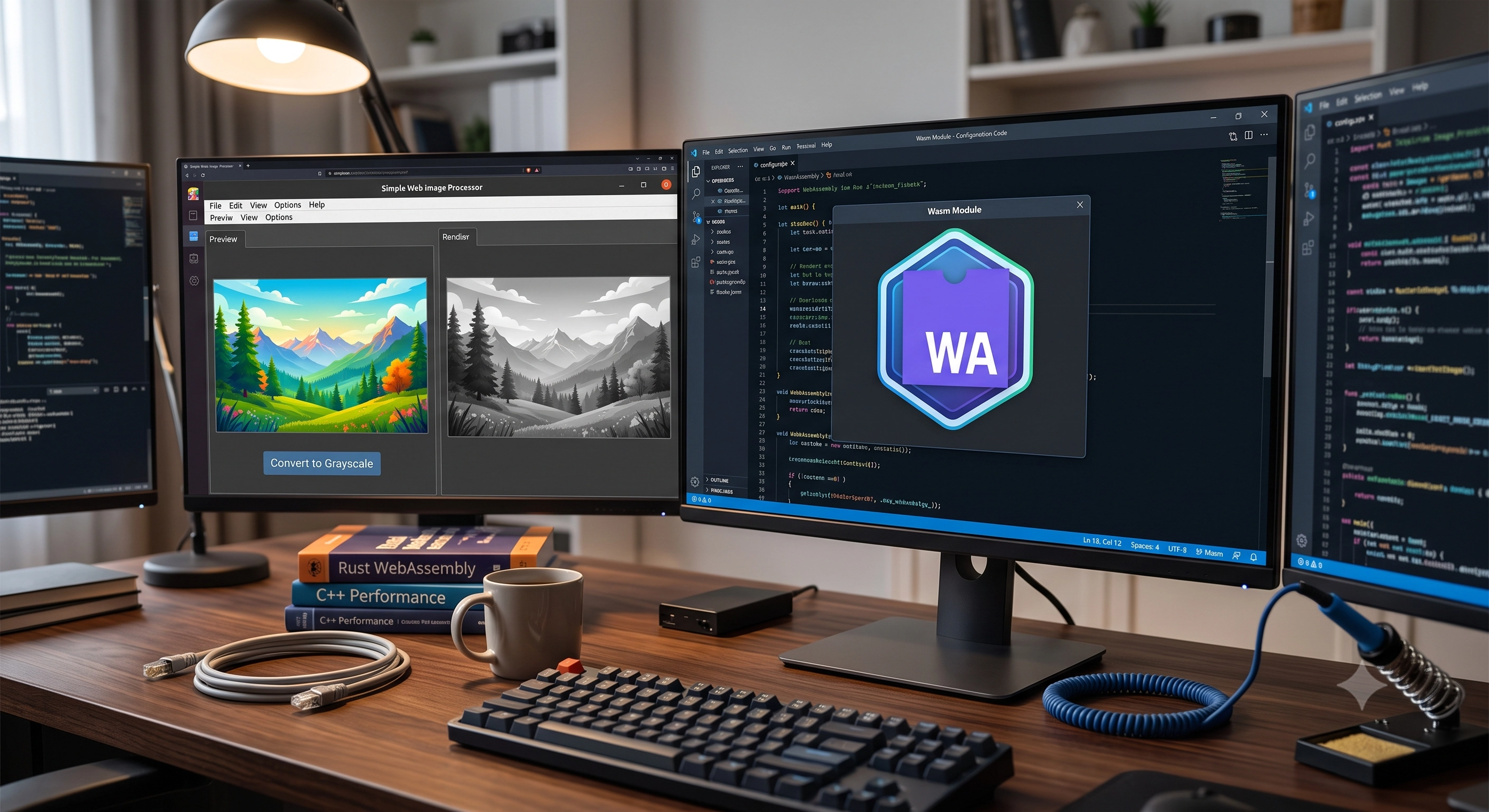
WebAssembly (Wasm): Bringing High Performance to the Browser
For years, JavaScript has been the undisputed king of web programming, powering everything from simple interactive elements to complex web applications. While JavaScript is incredibly versatile and has evolved significantly, certain tasks demand a level of performance that can be challenging for a dynamically typed, interpreted language to deliver efficiently. Enter WebAssembly (Wasm) – a game-changer designed to unlock near-native speed directly within your web browser.
What is WebAssembly?
At its core, WebAssembly is a binary instruction format for a stack-based virtual machine. What does that mean for you? Essentially, it's a low-level, high-performance compilation target for other programming languages like C, C++, Rust, and even Python or Go. Instead of writing JavaScript, developers can write code in these languages, compile it into Wasm, and then run it in a web browser alongside JavaScript.
Think of it as a highly optimized, compact format that web browsers can execute very quickly. It's not a replacement for JavaScript; rather, it's a powerful complement, allowing developers to choose the best tool for the job.
Why is Wasm a Big Deal?
WebAssembly addresses several key limitations of traditional web development:
- Near-Native Performance: This is Wasm's primary appeal. By compiling to a low-level binary format, Wasm modules can execute significantly faster than JavaScript for CPU-intensive tasks. This opens the door for applications previously considered too demanding for the web.
- Language Agnosticism: Developers are no longer confined to JavaScript. They can leverage their existing expertise and codebases in languages like C++ or Rust to build powerful web components. This greatly expands the talent pool and reusability of existing software.
- Portability and Security: Wasm runs in a secure, sandboxed environment within the browser, just like JavaScript. It's designed to be platform-independent, meaning a Wasm module compiled once can run across different browsers and operating systems.
- Small Footprint: Wasm modules are typically very compact, leading to faster loading times and better overall user experiences.
Real-World Use Cases
The potential applications for WebAssembly are vast and continue to grow:
- High-Performance Gaming: Imagine console-quality games running directly in your browser. Wasm makes this a reality, allowing game engines written in C++ to be compiled to the web.
- Image and Video Editing: Complex filters, real-time effects, and advanced image manipulations can now be performed client-side with remarkable speed.
- CAD and Engineering Tools: Interactive 3D modeling and data visualization tools, previously desktop-only, are migrating to the web thanks to Wasm.
- Desktop Applications on the Web: Even entire desktop applications can be ported, offering robust functionality within a browser tab.
- Beyond the Browser: Wasm isn't just for the web. With runtimes like WASI (WebAssembly System Interface), it's being used for server-side applications, IoT devices, and even blockchain environments, promising universal portability.
- AI/ML Inference: Running machine learning models directly in the browser for tasks like image recognition or natural language processing without sending data to a server.
How Does It Work (High-Level)?
When a browser encounters a Wasm module (typically a .wasm file), it's rapidly decoded and compiled into machine code, optimized for the user's specific hardware. This compilation process is much faster than parsing and interpreting JavaScript. Wasm modules can then interact with JavaScript, calling JavaScript functions and being called by them, creating a powerful symbiotic relationship.
Limitations and Challenges
While powerful, Wasm isn't a silver bullet. Debugging Wasm can be more complex than JavaScript, and direct DOM manipulation is not currently possible from Wasm (it relies on JavaScript for that). Also, Wasm modules need to be fetched and compiled, adding a step that might not always be worth it for simpler tasks. However, the ecosystem is rapidly maturing, and these limitations are being actively addressed by the community.
Key Takeaways
- WebAssembly provides a way to run high-performance code, compiled from languages like C++, Rust, or C, directly in web browsers.
- It significantly boosts performance for CPU-intensive tasks, making advanced applications feasible on the web.
- Wasm complements JavaScript, not replaces it, enabling developers to choose the right language for different parts of an application.
- Its applications extend beyond the browser to server-side and IoT environments, hinting at a future of truly universal binaries.
As web applications become more sophisticated and user expectations for performance grow, WebAssembly is poised to play an increasingly critical role. It’s an exciting time for web development, pushing the boundaries of what's possible directly in your browser.
Be the first to leave a comment.
Leave a comment